CHAPTER 1 : INTRODUCTION TO IT

IT is the integration of computers, communications equipment and the other technology used in computer-based information system. It is bringing about the fusion of several important industries dealing with computers, telephones, televisions and various handheld device.
Computer is an electronic device operating under the control of instructions stored in its own memory. The components of a computer are input devices, system unit, output devices, storage and communication device. In the computer, it also have computer software which have two types of it such as system software and application software. To share resources, hardware devices, data and information to the other computers, it must connected with networks and internet. It can save time and money. The examples of computer applications in society are for education, finance, government and healthcare.
CHAPTER 2 : COMPUTER HARDWARE COMPONENTS

In computer hardware components, it will learn about all the components in system unit such as processor, control unit, types of storage, cache, memory, data representations, expansion slots and adapter cards, ports and connectors, buses and bays.
In system unit, it have a main circuit board which named was motherboard. The major components inside system unit are processor, memory, adapter cards, ports, drive bays and power supply. Inside the processor it have Central Processing Unit (CPU), machine cycle, pipelining, parallel processing and register. Inside memory, it have Random Access Memory (RAM), memory reside, Read-Only Memory (ROM), CMOS and flash memory. For the ports, there are serial port, parallel port, USB port, FireWire port and the special-purpose ports.
In this chapter, there are a lot of hardware components that we can learn. It is because we can know how to use the hardware devices easily.
CHAPTER 3 : OPERATING SYSTEMS
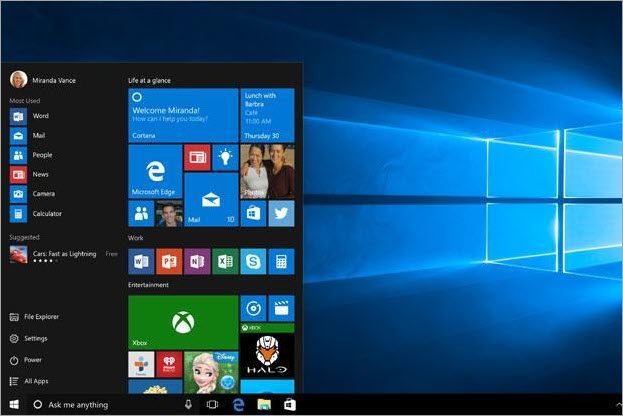
System Software is the programs that control operation of computer. There are three catagories of operating systems such as Embedded, Network and Stand-alone. Stand-alone has Disk Operating System (DOS) such as Windows 7, Mac OX and UNIX & LINUX. For the network, there are a few examples of network OS such as NetWare, Windows Server 2008, Solaris and Linux-multi purpose. Embedded OS is found on most mobile devices that able to run a single app at one time such as Symbian OS, IOS and Google Android. In the operating systems, there are also have Resource Allocation (Assigning computer resources to certain programmes and De-allocation (Releasing resources when a task is completed). The functions of Utililty Programmes are such as File manager, Backup and Restore, File Compression, Disk Defragmenter and Device drivers.
CHAPTER 4 : TELECOMMUNICATION (NETWORK)

Network is a system of interconnected computers, telephones or other communication devices that can communicate with one another and share applications and data. There are some benefits of networks, which are sharing of peripheral devices, programs and data, can have better communications and secured of information. In network, there have five types of network such as Wide Area Network (WAN), Metropolitan Area Network (MAN), Local Area Network (LAN), Home Area Network (HAN) and Personal Area Network (PAN).
Network Topology refers to the logical layout or shape of a network. There are three topologies that commonly used such as Bus Network, Ring Network and Star Network. Network have Intranets, Extranet and Virtial Private Networks (VPNs). There are networks components such as Wired/Wireless, Hosts and nodes, Packets and Protocols.
CHAPTER 5 : TELECOMMUNICATION (INTERNET, WORLD WIDE WEB, MULTIMEDIA)
Internet originated as ARPANET in September 1969. Internet is a worldwide collection of networks that links millions of businesses, government agencies, educational institutions and individual. Today, many home and small business users connect to the internet via high-speed broadband internet service. Internet Protocol (IP) is a number that uniquely identifies each computer or device connected to the internet. It consists of four sets of numbers between 0 and 255 seperated by dotted quad.
The World Wide Web (WWW) consist web server, HTML, web 2.0 and HTTP Cookie. Key terms are WWW, Website and Web Page. Uniform Resource Locator (URL) is a string of characters that points to a specific piece of information anywhere on the web, e.g. http://ptm.uthm.edu.my/garis-panduan-dan-polisi/polisi-ict.html
Multimedia refers to any application that combines text with graphics, animation, audio, video and virtual reality. A graphic is a digital representation of non-text information include BMP ,GIF, JPEG, PNG and TIFF. Animation is the appearance of motion created by displaying a seriesnof still images in sequence. Audio includes music, speech or any other sound. Video consists full-motion images that are played back at various speeds. Virtual Reality (VR) is the use of computers to simulate a real or imagined environment that appears as a three-dimensional space.
CHAPTER 6 : TELECOMMUNICATION (ETHICS, FILTERING AND PRIVACY)

A computer security risk is any event or action that could cause a loss of or damage to computer hardware, software, data, information or processing capability. A cybercrime is an online or internet-based illegal act such as hackers, crackers, script kiddies, corporate spies, cyber terrorists etc. Users can take several precautions to protect their home and work computers and mobile devices from these malicious infections.
Computer ethics is the moral guidelines that govern the use of computers and information systems. Information accuracy is a concern in not all information on the web is correct. Information privacy refers to the right of individuals and companies to deny or restrict the collection and use of information about them. Huge database store data online which can be viewed by others. It is important to safeguard your information.
Spam is an unsolicated e-mail message or newsgroup posting. E-mail filtering blocks e-mail messages from designed sources. Anti-spam programs attempt to remove spam before it reaches your inbox. The concern about privacy has led to the anactment of federal and state laws regarding the storage and disclosure of personal data.

 Syazwani Alias